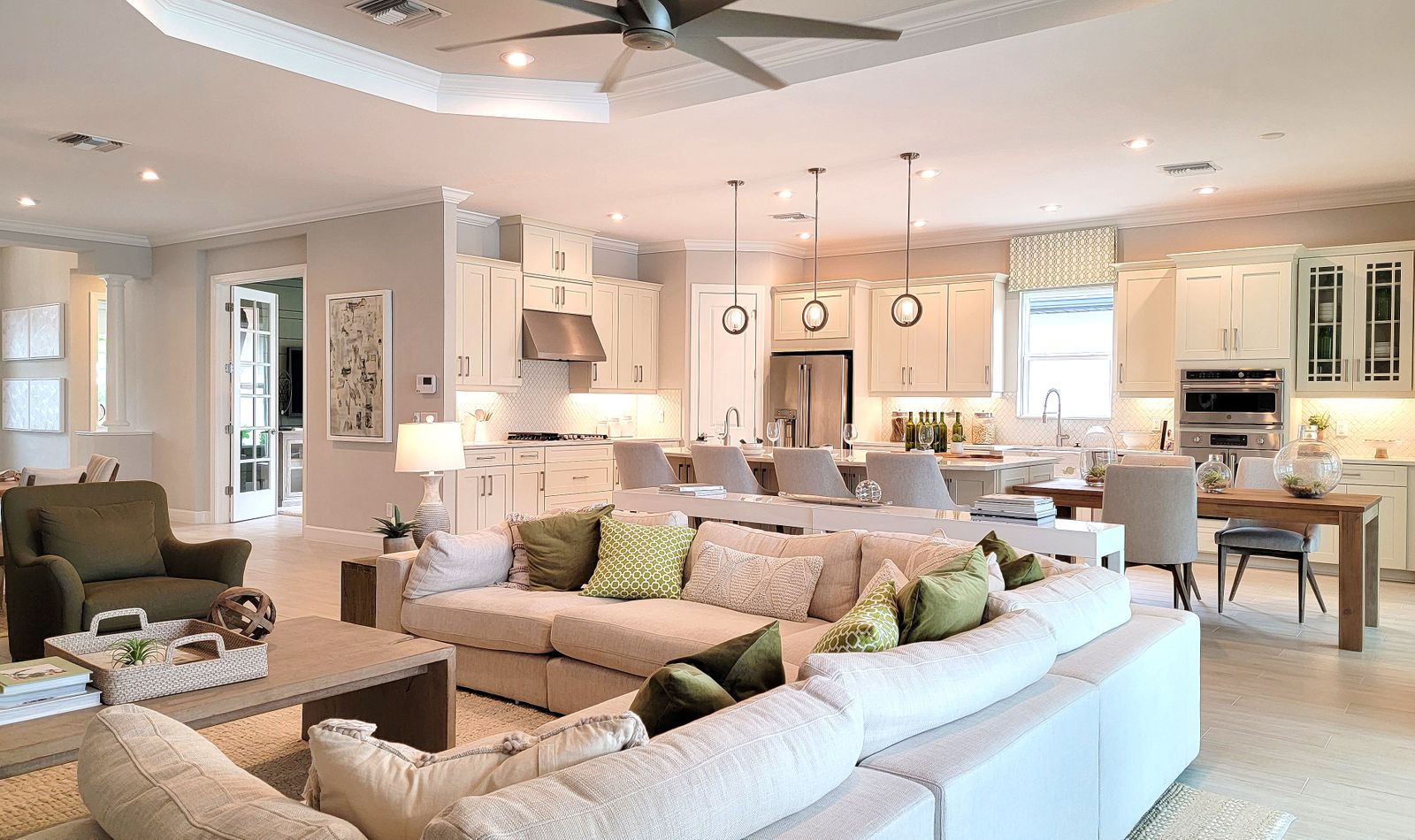
Walk into a home with a massive kitchen island, heated floors, a beautiful ensuite, smart appliances, a finished basement, and a backyard that looks like it belongs in a magazine, and it is easy to start thinking, "We need all of this."
Then you look at the price.
Suddenly, that dream kitchen feels a little less essential.
Buying a home often comes with a long list of features you would love to have. Some make everyday life noticeably better. Others look impressive during a showing but may not be worth paying thousands more for.
The challenge is figuring out the difference.
When comparing homes in Winnipeg, it helps to separate the features you genuinely value from the ones that simply create that initial wow factor.
The right question is not, "Does this house have everything?"
It is, "Which features are actually worth paying for based on how I live, what I can afford, and what I may need in the future?"
Here is how to think about it.
Start With Your Lifestyle, Not the Listing Photos
The easiest way to overspend on a home is to fall in love with features that do not actually fit your lifestyle.
If you rarely cook, a professionally designed kitchen with top-of-the-line appliances may not be your highest priority.
If you work from home, however, a dedicated office could be worth far more to you than a fancy dining room.
If you have young children, a functional mudroom or practical backyard may get used every single day.
If you love entertaining, an open living space and well-designed kitchen could make a meaningful difference.
Before looking at homes, make a list of the features you genuinely use or expect to use regularly.
Then separate them into three categories: must have, would love to have, and nice but unnecessary.
That simple exercise can make shopping much easier.
Think About Cost Per Use
One of the best ways to evaluate home features worth paying for is to think about how often you will actually use them.
Imagine a home has a beautiful outdoor kitchen.
If you host backyard dinners every weekend throughout the summer, that feature could be incredibly valuable to you.
If you rarely eat outside, it might simply be an expensive feature you admire a few times a year.
The same principle applies to everything from heated garages to oversized soaking tubs.
A feature does not need to be practical for everyone to be worth the money.
It just needs to be valuable to you.
Ask yourself, "Will I use this every week, every month, or almost never?"
The answer can tell you a lot.
Location Usually Beats Luxury Finishes
Here is a rule worth remembering when buying real estate.
You can change the finishes.
You cannot move the house.
If you have to choose between a better location and a more luxurious interior, the location deserves serious consideration.
A beautiful kitchen can eventually be renovated.
A dated bathroom can be updated.
Flooring can be replaced.
But you cannot move your property closer to work, family, schools, parks, transit, or the amenities you use regularly.
This does not mean you should ignore the condition of the home.
It means you should be careful about paying a premium for cosmetic features while overlooking the value of the property's location.
A Functional Layout Can Be Worth More Than Fancy Finishes
A home's layout affects your everyday life.
That makes it one of the best home features for buyers to consider.
A well-designed floor plan can make a home feel larger, more comfortable, and easier to live in without adding a single square foot.
Think about how the rooms connect.
Is the kitchen conveniently located near the dining and living areas?
Is there enough storage?
Are the bedrooms positioned in a way that works for your household?
Is there a practical entryway?
Does the home have space for your daily routines?
You can replace countertops.
You cannot easily redesign the entire structure of a home without significant expense.
A functional layout is often an underrated feature that deserves more attention during a showing.
Storage Is One of Those Features You May Appreciate Later
Storage is not particularly glamorous.
Nobody walks into a giant closet and says, "This is going to look incredible on Instagram."
But ask anyone who has lived in a home without enough storage, and they will tell you how important it becomes.
Closets, pantry space, basement storage, garage storage, built-ins, and practical entryway organization can make a home significantly easier to live in.
This is especially important in Winnipeg, where seasonal clothing, winter equipment, boots, sports gear, and outdoor items can take up considerable space.
You may not think you need additional storage today.
Give it a few Winnipeg winters.
You might change your mind.
Energy Efficiency Deserves a Closer Look
Energy-efficient features may not create the same instant excitement as a luxury kitchen, but they can have a more practical long-term impact.
Consider things such as newer windows, efficient heating and cooling systems, insulation, and other improvements designed to reduce energy consumption.
The key is to look at the condition and age of the home's major systems rather than simply checking a box for "energy efficient."
Ask questions.
How old is the furnace?
When were the windows replaced?
Has additional insulation been added?
Are there any known issues with the home's heating or cooling systems?
These features may not be exciting, but they can affect operating costs and future maintenance.
A Finished Basement Can Be Valuable, But It Depends
A finished basement can add a significant amount of usable living space.
It might become a family room, home office, gym, guest area, playroom, or entertainment space.
For some buyers, that flexibility is absolutely worth paying for.
But do not assume that every finished basement is equal.
Look at the quality of the work.
Is the space comfortable?
Is there adequate lighting?
Does it feel dry?
Are there signs of moisture?
Was the work professionally completed?
Does the layout actually work for your needs?
A poorly finished basement may not provide the same value as a thoughtfully designed one.
And if you are buying a home partly because of its basement, make sure you understand what you are actually getting.
A Garage Can Be More Than a Parking Spot
For Winnipeg homeowners, a garage can be a particularly useful feature.
Nobody needs a reminder about what winter can feel like.
A garage can provide shelter for your vehicle, additional storage, and workspace.
But once again, consider how much the feature is worth to you.
Do you have one vehicle or two?
Do you need extra storage?
Would you use the garage as a workshop?
Is it attached or detached?
Does it provide enough room for your needs?
A two-car garage may sound fantastic, but if you only need space for one vehicle and have no interest in using the additional space, it may not justify a significant price difference.
The Kitchen Is Important, But Do Not Get Distracted
Kitchens are one of the easiest places for buyers to fall in love.
And there is nothing wrong with that.
If you cook frequently, entertain often, or simply enjoy spending time in the kitchen, a good kitchen can genuinely improve your daily life.
But look beyond the finishes.
Is there enough counter space?
Does the layout make sense?
Is there adequate storage?
Are the appliances in good condition?
Would you actually change anything if you owned the home?
A kitchen with dated cabinets but a great layout may be a better opportunity than a stunning kitchen with poor functionality.
Cosmetics can be changed.
Good bones are harder to create.
Be Careful With Trendy Features
Every few years, a new home feature becomes incredibly popular.
Maybe it is a dramatic accent wall, a specific type of flooring, a particular appliance package, or a highly customized room.
Trends are not necessarily bad.
But they should not automatically justify paying more.
Ask whether the feature provides lasting value or simply looks current.
This is especially important if you are thinking about resale.
Highly personalized features may appeal strongly to one buyer and not at all to another.
A neutral, functional home often gives future buyers more flexibility.
Smart Home Technology Can Be Convenient
Smart thermostats, security systems, lighting, doorbells, locks, and other technology can make a home more convenient.
But convenience is not the same thing as necessity.
Consider whether you actually want the technology and whether the system is compatible with the way you live.
Also consider ongoing subscriptions, maintenance, compatibility, and whether the technology could become outdated.
A smart home feature that makes your life easier every day can be worthwhile.
Paying a significant premium simply because a house has more gadgets may not be.
Outdoor Space Depends on How You Live
A large backyard sounds wonderful.
But be honest about how much you will use it.
Do you enjoy gardening?
Do you have children or pets?
Do you host outdoor gatherings?
Do you want space for a deck, patio, or garden?
If yes, a great backyard could be one of the most valuable features you buy.
If you would rather spend your weekends away from home, maintaining a huge yard may eventually feel like another chore.
Think about enjoyment and maintenance together.
Do Not Ignore the Boring Stuff
Some of the most valuable home features are not flashy at all.
A solid roof.
A well-maintained furnace.
Good windows.
A sound foundation.
Reliable plumbing.
Updated electrical systems.
Proper insulation.
These things rarely create a dramatic showing moment.
Nobody walks into a mechanical room and thinks, "Wow, what an incredible furnace."
But these systems can have a major effect on your ownership experience.
When comparing homes, do not let beautiful finishes distract you from the condition of the fundamentals.
Consider What You Can Change Later
One of the most useful Winnipeg home buying tips is to separate permanent or expensive features from relatively easy cosmetic changes.
Paint can change.
Light fixtures can change.
Cabinet hardware can change.
Flooring can change.
Some kitchen and bathroom finishes can change.
Major structural elements, location, lot characteristics, and certain mechanical systems are much more complicated.
If a home has the location, layout, lot, and structure you want, you may be able to live with cosmetic imperfections while you gradually make the space your own.
You do not need to buy someone else's finished vision of a home.
You are buying the opportunity to create your own.
Think About the Price Difference
Here is where the numbers matter.
Suppose one home has several features you love but costs significantly more than another property.
Ask yourself what you are actually paying for.
Is the premium because of the location?
The lot?
The square footage?
The condition?
Or is much of the difference simply cosmetic?
If the cheaper home needs $30,000 in improvements but the more expensive home costs $100,000 more because of its finishes, the decision becomes much easier to evaluate.
You do not have to avoid expensive homes.
You simply want to understand what the extra money is buying.
Build a "Worth Paying For" List Before You Shop
Before you start seriously comparing properties, create your personal list.
Write down three to five features that would genuinely improve your life.
Maybe it is a garage.
Maybe it is a home office.
Maybe it is a large backyard.
Maybe it is a finished basement.
Maybe it is simply a great location close to everything you need.
Then identify the features you are willing to compromise on.
This gives you a filter.
Instead of asking, "Which house has the most?"
You can ask, "Which house gives me the things I value most?"
That is a much better way to shop.
The Best Features Are the Ones You Will Actually Use
There is no universal answer to which home features are worth paying for.
The right features depend on your lifestyle, your budget, your plans, and the property itself.
A gourmet kitchen could be priceless to one buyer and completely unnecessary to another.
A large garage could be essential for one family and irrelevant to someone else.
A finished basement could transform one household's living space while sitting mostly unused by another.
The goal is not to buy the house with the longest feature list.
It is to buy the home that gives you the best combination of location, functionality, condition, comfort, and value.
Ready to Find a Home That Fits Your Priorities?
If you are shopping for a home in Winnipeg, it helps to have someone who can help you separate the exciting features from the genuinely valuable ones.
Ty Mitchell can help you compare properties, ask the right questions, and look at the bigger picture so you can make a decision based on what actually matters to you.
Because the best home is not necessarily the one with the fanciest kitchen, the biggest basement, or the longest list of upgrades.
It is the one that fits your life, fits your budget, and still feels like the right choice after the excitement of the showing wears off.